


![[Free Monitor] Wattcycle V2 48V 105Ah Golf Cart Bluetooth LiFePO₄ Lithium Battery – 250A BMS for High Torque & Hills](http://www.wattcycle.com/cdn/shop/files/2000x2000_1_300x.webp?v=1790072112)
![[Free Monitor] 48V 100Ah Golf Cart Bluetooth LiFePO₄ Lithium Battery - 200A BMS](http://www.wattcycle.com/cdn/shop/files/WT48V100AH200GC_300x.webp?v=1777023011)


![[Free Monitor] Wattcycle V2 48V 105Ah Golf Cart Bluetooth LiFePO₄ Lithium Battery – 250A BMS for High Torque & Hills](http://www.wattcycle.com/cdn/shop/files/2000x2000_1.webp?v=1790072112&width=320)
![[Free Monitor] 48V 100Ah Golf Cart Bluetooth LiFePO₄ Lithium Battery - 200A BMS](http://www.wattcycle.com/cdn/shop/files/WT48V100AH200GC.webp?v=1777023011&width=320)


Key Takeaway
- Size for your actual load, not the biggest number on the page: essentials-only coverage, a refrigerator, medical devices, WiFi, and some lighting, typically starts around 5kWh, while whole home coverage for air conditioning, a well pump, and larger appliances calls for 16kWh or more.
- For most whole home hurricane backup in Florida, Texas, and other Gulf Coast states, the 12kW split-phase inverter paired with the 48V 314Ah 16kWh LiFePO4 battery is the strongest baseline, since it covers both 120V and 240V circuits and can run air conditioning and a well pump at the same time.
- 240V split-phase support only matters if your load list requires it: central air, a well pump, an electric water heater, or a dryer. For everyday 120V essentials alone, a compact 6.5kW single-phase inverter paired with the 5.12kWh wall-mounted battery is usually the right fit.
- Switchover speed matters when the grid actually fails: WattCycle systems switch to battery power automatically in under 10ms, fast enough that sensitive electronics and most medical equipment do not register the interruption.
- Solar becomes the more realistic recharge path after landfall, when fuel and grid power may still be limited for days. A system with solar charging support matters most when the outage is expected to run longer than a day or two.
- For the largest homes or outages stretching a week or more, size up rather than stack smaller units: the Super 12kW split-phase inverter paired with the 32kWh smart home energy storage battery is the right starting point, and both scale further later if more capacity is needed.
When Is the Hurricane Season in 2026?
The 2026 Atlantic hurricane season runs from June 1 through November 30. That doesn't mean a hurricane is impossible outside those dates, only that this window is when they are most likely to form. The season's climatological peak falls around September 10, which means the most active stretch of the year is happening right now, not somewhere off in the distance. Whatever the season has looked like up to this point, this is the moment to have a battery backup for hurricane season ready, not something to revisit once storm season winds down.
What Is the Latest 2026 Atlantic Hurricane Season Update?
As of Now, the Atlantic has produced five named storms this year, Arthur, Bertha, Cristobal, Dolly, and Edouard, and none of them has strengthened into a hurricane. That's unusual. The first hurricane of an Atlantic season typically forms around August 11, and by early September a normal year would already have logged at least one major hurricane. AccuWeather Lead Hurricane Expert Alex DaSilva put it plainly: "We should have two hurricanes and one major hurricane by this point." The season is now closing in on the latest date an Atlantic season has gone without producing its first hurricane in the satellite era, a record currently held jointly by 2002 and 2013, both years that also saw El Niño conditions in place. Two of this year's five storms have already made landfall on the US Gulf Coast. Arthur came ashore in June, bringing record rainfall to Louisiana and spawning tornadoes along the coast, and Bertha followed in July, making landfall in St. Bernard Parish, Louisiana, after forming just south of the Florida panhandle.
What Does NOAA's Outlook Actually Say?
NOAA's most recent seasonal outlook, issued in August and still the standing forecast as the season moves through its peak, puts the odds of a below normal season at 75%, with a 20% chance of a near normal season and just a 5% chance of an above normal one. For the season as a whole, NOAA expects 7 to 13 named storms, 2 to 6 of which could become hurricanes, and 0 to 2 major hurricanes. The reason behind the lower numbers is El Niño, a warming pattern in the eastern Pacific that tends to increase wind shear across the Atlantic. Stronger wind shear makes it harder for a developing storm to hold its structure together long enough to organize into a hurricane, which is largely why this year's storms have struggled to intensify. Forecasters have also flagged the chance of this El Niño strengthening further into Super El Niño territory before the season ends, which would only add to the wind shear already working against storm development. NOAA's National Weather Service Director, Ken Graham, was direct about what that means for preparation: "It's essential to review your hurricane preparedness plan now."
Does a Below Normal Forecast Mean September Is Harmless?
A below normal number on a forecast is not the same as a harmless season. NOAA is careful to point out that its outlook describes overall activity, not where or whether any single storm will make landfall, and that two seasons with similar storm counts can leave very different damage behind. A quiet year on paper has produced serious storms before, and a below average one can still put a major hurricane on the coast. As AccuWeather's Alex DaSilva has said of exactly this kind of season, "It only takes one storm to define a hurricane season." That's really the number that matters here, not 7 or 13, but one, since that's all it takes for a season to become personal for the family living through it.
Which Coastal Areas Face the Highest Risk This Season?
Florida carries the highest likelihood of a direct hit of any state in the hurricane season, and this year is no exception, with forecasters continuing to flag it among the areas most likely to see an impact. Alongside Florida, the northern and eastern Gulf Coast, the Carolinas, and the Texas coastline are named as this year's higher risk zones, largely because these are the coastlines storms are most likely to reach before wind shear has a chance to weaken them. That doesn't mean other coastal states are in the clear. It means these areas are worth watching most closely as the season's peak plays out over the coming weeks.
Florida, the Gulf Coast, the Carolinas, and Texas remain this year's highest risk zones for a direct hit.

What Should Homeowners in Coastal Evacuation Zones Prepare For?
In Florida, along the Gulf Coast, in the Carolinas, and in Texas, a hurricane watch can turn into a mandatory evacuation order within a day. For homeowners bracing for that kind of order, backup power for an evacuation zone means more than deciding what to pack in the car. A home battery backup system can be set to prioritize charging from the grid in the days before a storm, so it's fully topped off before anyone leaves, not something someone has to remember on the way out the door. While the household is away, it keeps essential systems running on its own: a security system stays on, a sump pump keeps a basement or crawl space from flooding, and a freezer full of food doesn't spoil while the power is out and no one is home to notice. Coming back to a house that stayed protected while it was empty is a meaningfully different experience than coming back to find out what was lost while everyone was gone.
How Much Backup Power Do You Actually Need This Hurricane Season?
There isn't one answer that fits every home, but the right amount comes down to three questions. How many days are you realistically planning for? A short outage is very different from the week or more that a direct hit can cause in a hard hit area. Do you need to cover just the essentials, a refrigerator, medical equipment, WiFi, some lighting, or does the whole home need to stay running, including air conditioning and a well pump? And is there a chance the home will sit empty during a mandatory evacuation, which usually calls for more capacity than most people first assume, since the system needs to run unattended for as long as the evacuation lasts, not just for a few hours while someone's home to manage it.
For a smaller household focused on essentials, a compact single phase setup is usually enough. For homes in Florida, Texas, and other hurricane-prone states, where outages in the higher risk zones are more likely to stretch several days rather than several hours, a whole home backup covering both 120V and 240V circuits is the more realistic baseline. Among the best hurricane backup power options available, matching the system size to actual risk and evacuation reality matters more than picking the largest unit on the page. WattCycle's guide to choosing the right whole home battery backup combination walks through exactly how to match an inverter and battery pairing to a home's electrical demand, along with the current hurricane season pricing available across the lineup.
How Does WattCycle Prepare a Home for Whatever This Season Brings?
WattCycle is offering a limited-time Peace of Mind Price across its full range of home energy storage systems, putting reliable emergency backup within reach for more families. This 2026 hurricane season, WattCycle is offering an exclusive coupon code BLOGEXTRA, enter it at checkout to receive a 6% discount on full lineup of home backup batteries and all inverter, making dependable power protection more accessible than ever.
Whether this year's numbers hold or not, being ready for the one storm that matters comes down to the same thing: power already stored and ready before the grid goes down. WattCycle's whole home battery backup systems pair a 48V hybrid inverter with a 48V LiFePO4 battery, and together they switch a home over automatically the moment the grid drops, in under 10 milliseconds, without anyone needing to start anything by hand. Charging works the same way in reverse. The system can prioritize grid or solar charging ahead of a storm so it's topped off before landfall, and once the storm passes, it recharges again, either from the grid once power returns to the area, or by acting as a solar battery backup once there's enough sunlight to draw from. None of that changes based on what NOAA's percentages say in any given year. It's built to be ready for the season regardless of how that season turns out.
Recommend Whole Home Battery Backup System
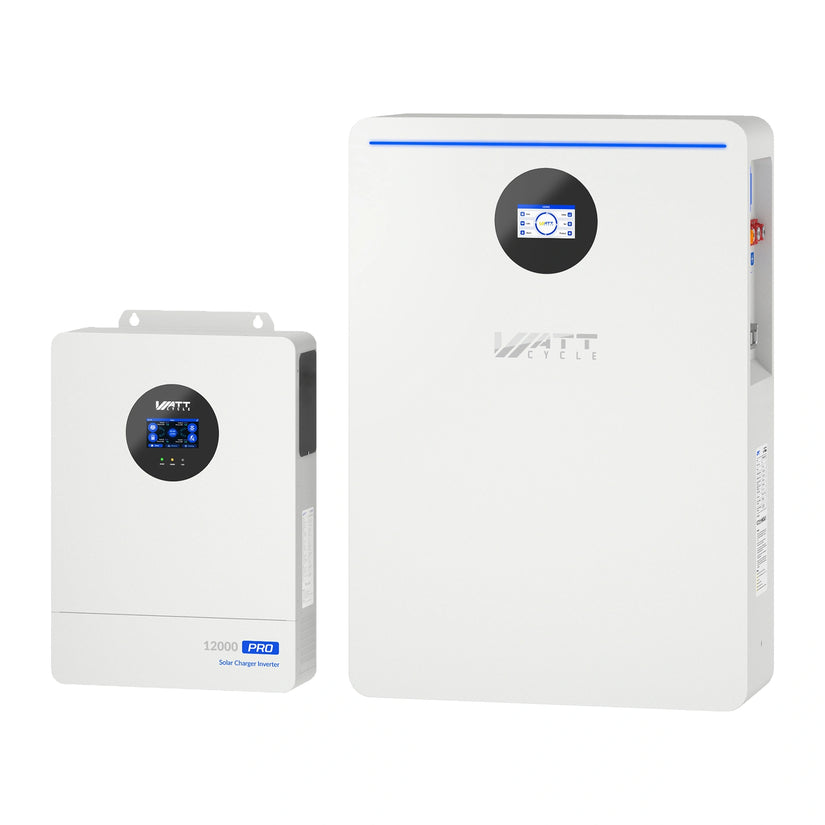
32kwh LiFePO4 Battery & 12kw inverter ($8,599.99)
after the coupon code only $8,084.00


Comments
No comments yet. Be the first to share your thoughts.
Leave a Comment