


![[Free Monitor] Wattcycle V2 48V 105Ah Golf Cart Bluetooth LiFePO₄ Lithium Battery – 250A BMS for High Torque & Hills](http://www.wattcycle.com/cdn/shop/files/2000x2000_1_300x.webp?v=1790072112)
![[Free Monitor] 48V 100Ah Golf Cart Bluetooth LiFePO₄ Lithium Battery - 200A BMS](http://www.wattcycle.com/cdn/shop/files/WT48V100AH200GC_300x.webp?v=1777023011)


![[Free Monitor] Wattcycle V2 48V 105Ah Golf Cart Bluetooth LiFePO₄ Lithium Battery – 250A BMS for High Torque & Hills](http://www.wattcycle.com/cdn/shop/files/2000x2000_1.webp?v=1790072112&width=320)
![[Free Monitor] 48V 100Ah Golf Cart Bluetooth LiFePO₄ Lithium Battery - 200A BMS](http://www.wattcycle.com/cdn/shop/files/WT48V100AH200GC.webp?v=1777023011&width=320)


AccuWeather has lowered its outlook for the 2026 Atlantic hurricane season, pointing to a strengthening El Niño pattern that's expected to hold back overall storm development. Even with the storm count trimmed, the number expected to make direct impact on the United States hasn't moved. Two storms, Arthur and Bertha, have already reached land this year, a reminder that a quieter season and a risk free one are not the same thing. As AccuWeather's lead hurricane expert Alex DaSilva put it, "It only takes one storm to define a hurricane season." That's really the question worth sitting with before the season reaches its peak in September: not how many storms are forecast, but whether your home could handle it if just one of them found you.
What Happens Inside a Home When the Power Goes Out for Days?
Hurricanes often cause power outages in certain areas. The lights go out, and then the quieter problems start showing up one by one. The refrigerator stops holding its temperature, and within a few hours everything inside becomes a guessing game. Without air conditioning, a Gulf Coast or Carolina summer turns a living room into something closer to a sauna, which is hard on everyone but especially hard on young children and older adults who don't regulate heat as well. A water heater or well pump going dark means no hot water. Somewhere in the middle of all this, a phone battery dies right when you're trying to reach a family member and confirm everyone's safe. For a household with a medical device that runs on electricity, a hurricane power outage isn't an inconvenience at all; it's a genuine safety concern that has to be planned around ahead of time, not figured out in the moment. None of these problems are dramatic on their own. Stacked together over two or three days, they add up to a genuinely exhausting way to ride out a storm.

How Does a Home Battery Backup System Actually Work?
None of this has to be how a storm goes for your home. The difference between struggling through an outage and barely noticing one usually comes down to a single thing: whether power was already stored and ready before the grid went down. That's why choose WattCycle home battery backup. In the days before a storm arrives, the system can be set to prioritize charging from the grid or solar, so the battery tops off automatically ahead of landfall instead of depending on someone remembering to plug it in at the last minute. The moment the grid goes down, the system detects the loss and automatically switch to the backup battery power source within 10ms, with no manual start and no reason to go outside in bad weather to flip anything on. Whatever is connected, whether that's a refrigerator and a few outlets or a home's full electrical panel, keeps running on stored power until the grid comes back. Once the storm passes, the system recharges again on its own, either from the grid once power is restored in the area, or from solar once the skies clear and there's enough sunlight to draw from. That's the real appeal of backup power for hurricanes: it takes the guesswork and the physical effort out of an already stressful few days, both before the storm and after it.
WattCycle is offering a limited-time Peace of Mind Price across its full range of home energy storage systems, putting reliable emergency backup within reach for more families. This 2026 hurricane season, WattCycle is offering an exclusive coupon code BLOGEXTRA, enter it at checkout to receive a 6% discount on full lineup of home backup batteries and all inverter, making dependable power protection more accessible than ever.
WattCycle understands that when a storm closes in, dependable electricity isn't just about keeping devices running. It's the quiet confidence that lets families look after one another. Every family in a storm's path deserves to spend those days focused on each other, not on where the next outlet or gas can is coming from. WattCycle hopes every home along this season's path makes it through safely, with the people inside it, and the everyday life they've built, still protected.
Which WattCycle Combination Is Right for Your Home?
WattCycle designs its inverters and batteries to work together, and choosing them as a matched set is the most cost-effective way to build a home battery backup system. Getting that pairing right starts with one distinction worth understanding: single-phase inverters power standard 120V circuits, the outlets, lighting, and small appliances found throughout a home, while split-phase inverters also cover 120V / 240V circuits, the ones that run central air conditioners, well pumps, electric water heaters, and dryers. Most single-family homes in the United States are wired for split-phase service, so it's worth checking your panel before choosing.
For apartments, condos, and compact homes: a 6.5kW single-phase inverter paired with the 5.12kWh wall-mounted battery or server rack battery. The inverter weighs about 15kg and mounts flat against a wall, so it fits in a hallway closet or utility space without eating up floor room. Since smaller homes typically run 120V circuits throughout, this pairing covers the full panel rather than a partial slice of it, and the battery recharges to full in about an hour under its 1C charge rate, so reserve capacity comes back quickly between outages. Together, it comfortably runs a refrigerator, WiFi router, medical devices, and several lights for the length of most outages.
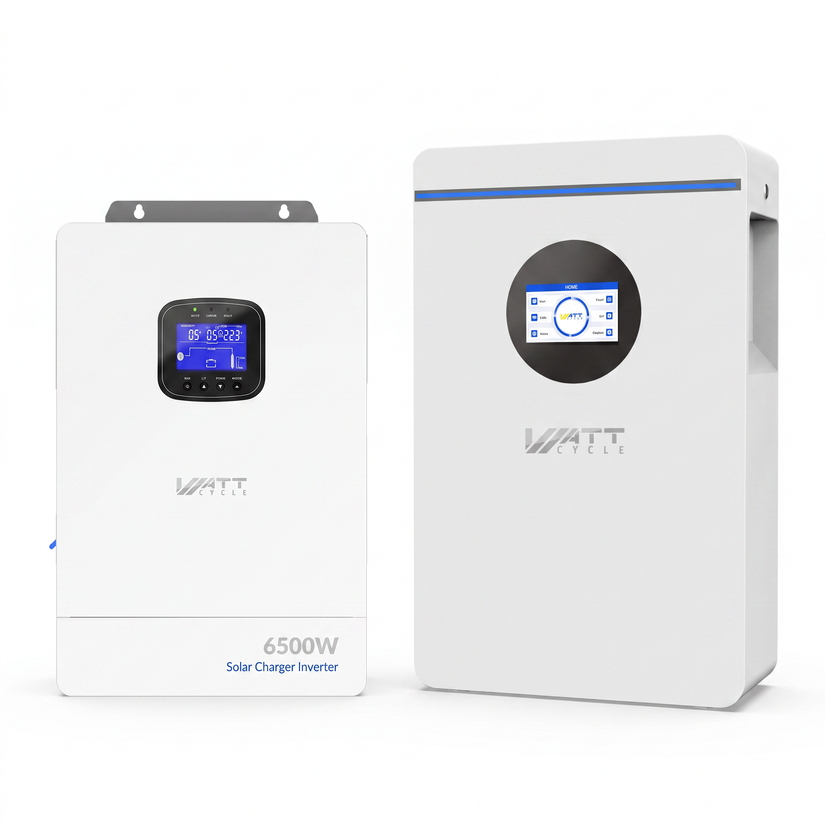
6.5kw inverter & 5.12kWh LiFePO4 Battery ($1,699.99)
Use discount code BLOGEXTRA at checkout to get 6% off your order,
after the coupon code only $1,598.00
For full-size homes running central air and a well pump: the 12kW split-phase hybrid inverter paired with the 16kWh floor-standing battery. Covering both 120V and 240V circuits from one unit means air conditioning, a well pump, and an electric water heater can keep running alongside everyday outlets and lighting, not just the essentials. With 16kWh of stored capacity and 15.36kW of continuous power behind it, this pairing is built to carry a full-size home through a multi-day outage rather than just bridge a short one, and built-in wheels make the battery easy to reposition in a garage or utility room. For homeowners in Florida, Texas, and other hurricane-prone states where losing power is a yearly risk rather than a rare event, this is usually the starting point for real whole-home coverage, and it holds up well against a traditional generator without the fuel runs, noise, or exhaust to manage during a storm.
For the largest homes, the highest electrical demand, or outages that stretch well past a week: the Super 12kW split-phase inverter with its 200A bypass, paired with the 32kWh whole home energy storage system. The 200A bypass path is sized for homes with heavier electrical demand, so grid power routes through without being throttled by a lower-current bypass, and an 18kVA peak rating gives enough headroom for the startup surge that larger air conditioners and well pumps draw the moment they kick on. Paired with 32kWh of storage, a home can expect to cover essential systems and larger loads for several days rather than one, and both halves of this combination scale further if needed, the inverter up to 72kW and the battery up to 192.9kWh across multiple parallel units, so added capacity doesn't mean replacing what's already installed. This is effectively the largest setup WattCycle offers, and it's the one worth looking at if your area has ever gone without power for a week or longer, whether from a hurricane parked over the coast for days or a tornado that takes out transmission lines the local utility can't repair quickly. Scaled up, it's built to carry a home through 10 to 12 days without grid power, not just a long weekend.
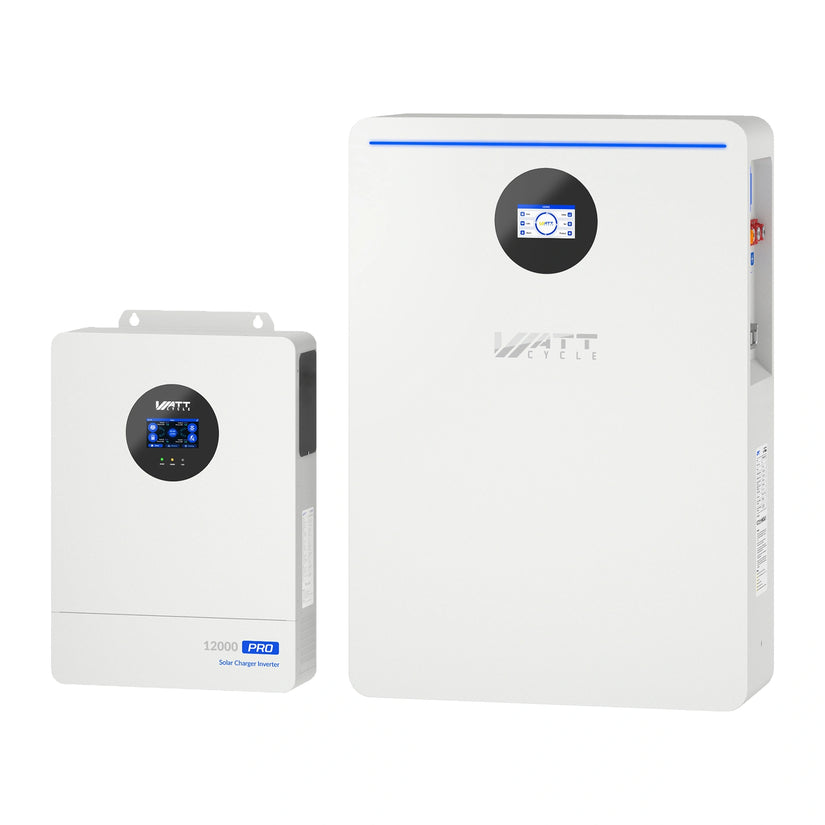
32kwh LiFePO4 Battery & 12kw inverter ($8,599.99)
Use discount code BLOGEXTRA at checkout to get 6% off your order,
after the coupon code only $8,084.00
There isn't a single correct system size. The right combination comes down to how your home's panel is wired and how many days of backup matter most to you.
How Can You Get Your Home Ready Before the Season Peaks?
The Atlantic hurricane season typically peaks around September 10, and some of the most damaging storms in recent memory, Hurricane Helene and Hurricane Milton among them, made landfall after that date, not before. Waiting until a storm is named and tracking toward the coast is the hardest time to prepare. Batteries take time to transportation, and once a hurricane watch is issued, everyone else is thinking about backup power too.
Getting a home battery backup system in place now means one less thing to think about when the forecast turns serious. It's not about assuming the worst. It's about not having to learn the hard way how to keep power during a hurricane, and about knowing the people in your home, whoever they are and whatever they depend on, are covered before the first watch is ever issued.


Comments
No comments yet. Be the first to share your thoughts.
Leave a Comment