


![[👍 Bestseller] WattCycle 12V 314Ah Mini Basic LiFePO₄ Battery – Compact Size, High Capacity](http://www.wattcycle.com/cdn/shop/files/WT12V314AH200MINI_ea4d738c-93d2-43e7-a0de-f2985c366eba_300x.webp?v=1777023011)


![[Free Monitor] Wattcycle 48V 105Ah Golf Cart Bluetooth LiFePO₄ Lithium Battery – 250A BMS for High Torque & Hills](http://www.wattcycle.com/cdn/shop/files/WT48V105AH250GCBT_fd49751b-10f0-467d-9543-afe48c8b6ec4_300x.webp?v=1777023011)
![[Free Monitor] 48V 100Ah Golf Cart Bluetooth LiFePO₄ Lithium Battey - 200A BMS](http://www.wattcycle.com/cdn/shop/files/WT48V100AH200GC_300x.webp?v=1777023011)


![[👍 Bestseller] WattCycle 12V 314Ah Mini Basic LiFePO₄ Battery – Compact Size, High Capacity](http://www.wattcycle.com/cdn/shop/files/WT12V314AH200MINI_ea4d738c-93d2-43e7-a0de-f2985c366eba.webp?v=1777023011&width=320)


![[Free Monitor] Wattcycle 48V 105Ah Golf Cart Bluetooth LiFePO₄ Lithium Battery – 250A BMS for High Torque & Hills](http://www.wattcycle.com/cdn/shop/files/WT48V105AH250GCBT_fd49751b-10f0-467d-9543-afe48c8b6ec4.webp?v=1777023011&width=320)
![[Free Monitor] 48V 100Ah Golf Cart Bluetooth LiFePO₄ Lithium Battey - 200A BMS](http://www.wattcycle.com/cdn/shop/files/WT48V100AH200GC.webp?v=1777023011&width=320)


Expert Tested. Storm Ready.
WattCycle: The pro-grade backup for your home.
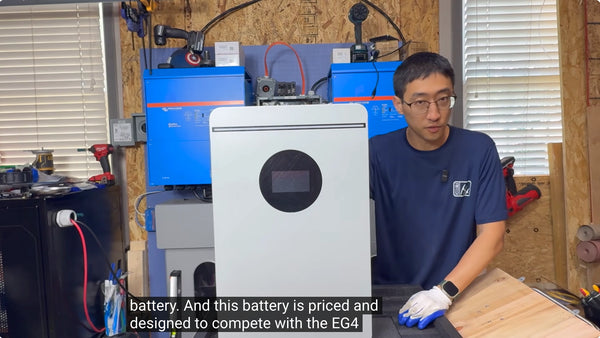
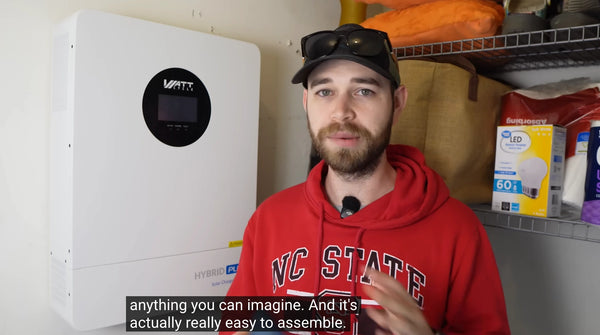
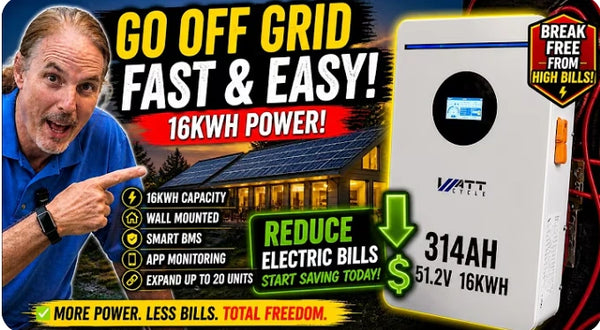
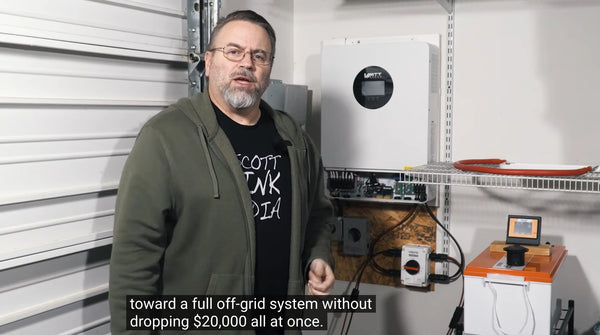
Reliable Home Power Backup, Without Compromise

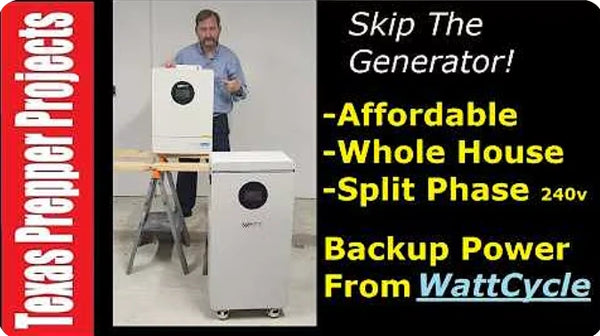
WattCycle Storm-Ready Whole-Home Backup Power Kit — 48V 12kW Hybrid Inverter + 48V 314Ah 16kWh Battery
⚡ Whole-Home Backup Power: 12kW split-phase output paired with 16.07kWh LiFePO₄ storage runs central AC, fridge, and all essentials for 2–3 days.
🔄 ≤10ms UPS Seamless Transfer: Grid goes down? You won't even notice—sensitive electronics, medical devices, and TVs stay on without a flicker.
☀️ 24kW Dual MPPT Solar Recharge: Harvest massive solar energy during and after the storm. Your batteries refill by daylight, keeping you off-grid indefinitely.
📈 Limitless Expansion: Scale up to 6 inverters (72kW) and 15 batteries (240kWh+)—build a system that grows with your home or farm.
🛡️ Certified Safe & Built to Last: EV-grade cells, 3A active balancing, and 5+2 year warranty for decade-long peace of mind.

Upgrade V2: WattCycle 48V 12kW All-in-one Hybrid Inverter:Split Phase 120/240V, 24kW Dual MPPT, 250A Charger
⚡ 12kW Split-Phase Output: Delivers 120V/240V pure sine wave power with 24,000VA peak to run your entire home simultaneously.
☀️ 24kW Dual MPPT Solar: Two independent MPPT channels with 98%+ efficiency; harvest maximum solar energy before and after the storm.
🔄 ≤10ms UPS Transfer: Seamless switchover protects sensitive electronics—computers, medical devices, and TVs never flicker or restart.
📈 6-Unit Parallel (72kW Max): Scale from a single 12kW unit up to 72kW output for large off-grid villas, workshops, or farms.
🛡️ 21 Protection Functions: Automatic AC circuit breaker plus comprehensive protections for overcurrent, overheat, short-circuit, and more.

WattCycle 16kWh 48V 314Ah Floor Standing Bluetooth LiFePO4 - Active Balancing | CAN/RS485
🔋 16kWh EV-Grade Power: Massive 16.07kWh capacity with 300A BMS delivers 15.36kW continuous output for whole-home backup.
🚀 3A Active Balancing: Industry-leading 8-way active balancing with 3A ultra-large current extends lifespan by 50%.
⚡ 300A BMS & 1C Fast Charge: Handles high-power devices with 20+ protections; full charge in just 1 hour at max current.
📱 Smart Monitoring: Bluetooth App + LCD touchscreen + flowing capacity light bar for real-time visibility of every cell.
📈 Easy Scalability: Wall-mounted or floor-standing with swivel wheels; parallel up to 15 units for 240kWh+ total storage.

WattCycle 5.12kWh 48V 100Ah Wall-Mount Bluetooth LiFePO4 Battery – Active Balancing | RS485/CAN
🚀 3A Active Balancing: 100× faster cell equalization extends battery lifespan by 50% and maximizes energy efficiency.
🔋 BYD Grade A Cells: Premium EV-grade LiFePO₄ cells deliver 6000+ deep cycles and over 12 years of reliable performance.
📱 Smart Monitoring: Real-time data via Bluetooth App and bright LCD touchscreen with flowing capacity light bar.
🏠 Space-Saving Wall Mount: Slim wall/lean-mounted design (398×200×625 mm) frees up floor space for clean installation.
⚡ 1C Fast Charge & 20P Parallel: Full charge in ~1 hour; easily expand from 5.12kWh up to 102.4kWh as your power needs grow.

V2.5 WattCycle 48V 100Ah Bluetooth LiFePO₄ Rack Battery – Active Balancing | LCD | Smart Comms
🚀 3A Active Balancing: 100x faster equalization for maximum lifespan and energy efficiency.
🔋 BYD Grade A Cells: Premium EV-grade cells ensuring over 10 years of reliability.
📱 Smart Monitoring: Real-time data via Bluetooth App and bright LCD touchscreen.
🔄 Wide Compatibility: Seamlessly connects with major inverters using CAN/RS485 protocols.
📈 Easy Scalability: Stackable 3U design expands power up to 102.4kWh easily.

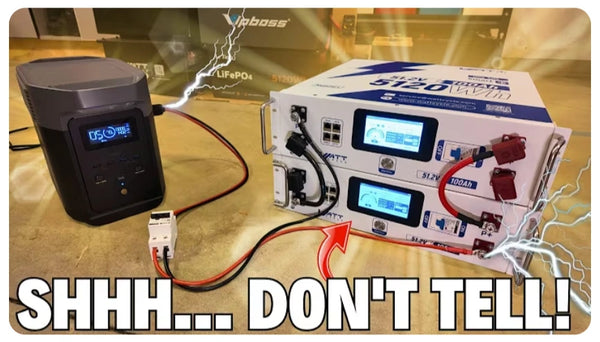
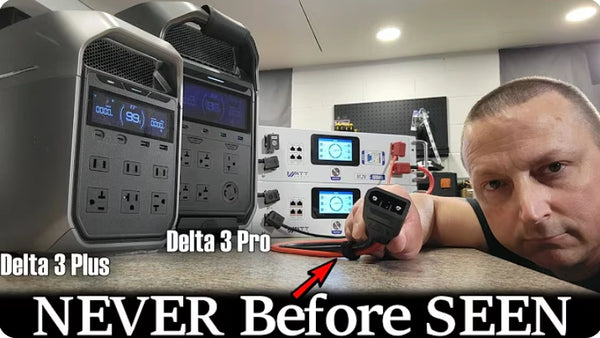
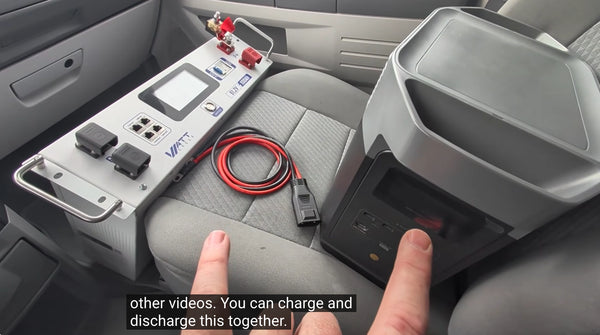
✅ WattCycle First-to-Market: WattLINK - EcoFlow Delta 2/3 Series PPS Expansion Adapter Cable (M8 to XT150-Style)
- Skip the Inverter Tax: Expand your EcoFlow ecosystem using standard 48V batteries without paying for a new inverter or high-priced proprietary expansion packs.
- Smart Power Control: Your EcoFlow portable power station remains the "brain" of the system, natively managing the charge and discharge power through the industrial-grade 8AWG WattLINK cable.
- 50A Bidirectional Link: Enjoy rapid, high-current power transfer between your primary station and external 48V storage for seamless backup energy.
- Please note that this cable is not compatible with EcoFlow Delta Ultra, Delta Pro, Delta Mini, River series and all other EcoFlow power station models.
Storm Backup Power FAQ
For hurricane preparedness, the best backup power solution is a solar + battery storage system paired with a high-capacity inverter. Unlike gas generators that require fuel, run loud, and can't be used indoors, a lithium battery system stores energy silently and safely inside your home.WattCycle recommends the 48V 12kW Hybrid Inverter as the heart of your storm backup system. With split-phase 120V/240V output, 24kW dual MPPT solar input, and ≤10ms UPS seamless transition, it powers your entire home without interruption when the grid goes down. Pair it with the 48V 314Ah 16kWh Wall-Mount Battery for massive energy reserve, or start with the 48V 100Ah 5.12kWh Server Rack Battery and expand up to 20 units (102.4kWh total) as your needs grow. 5+2 year warranties for peace of mind during the worst storms.
The "right size" depends on which appliances you must keep running. For essential loads (refrigerator, lights, WiFi, phone charging, medical devices), you need roughly 3–5kWh per day. For whole-home backup (including AC, water heater, washer/dryer), you'll need 10–20kWh+.WattCycle offers scalable solutions for every scenario:
- Entry level: One 48V 100Ah 5.12kWh Battery (Server Rack or Wall-Mount) covers 24–36 hours of essential loads. Both feature 100A BMS with 200A peak current handling.
- Whole-home: Pair the 48V 12kW Inverter with the 48V 314Ah 16kWh Battery for 15.36kW continuous output—enough to run central AC, refrigerator, and all major appliances simultaneously.
- Expandable: Start small and grow. Our 48V batteries support parallel expansion (up to 15–20 units), so your system grows with your family's needs.
Follow this 3-step calculation:
Step 1: List your essentials and their wattage:
- Refrigerator: 150–400W (surge ~1,200W)
- LED lights (10 bulbs): 100W
- WiFi router + modem: 30W
- Phone/laptop charging: 50W
- Window AC unit: 800–1,500W
- Medical equipment: varies
Step 2: Calculate daily consumption. A typical "essentials only" home uses 3–5kWh per day.
Step 3: Add 20–30% buffer for inefficiencies and surge loads.
- 3–5 kWh/day: 1× 48V 100Ah 5.12kWh Battery.
- 8–12 kWh/day: 2× 48V 100Ah Batteries (10.24kWh) + 12kW Inverter.
- 15–20+ kWh/day: 1× 48V 314Ah 16kWh Battery + 12kW Inverter.
- Whole home + AC: 2× 48V 314Ah (32kWh) + 12kW Inverter (parallelable to 72kW).
Our 48V 12kW Inverter handles 24,000VA peak power, so even high-surge appliances like refrigerators and AC units start without issues.
Absolutely yes — with the right system. The key factors are continuous power (W) and surge power (VA).Most refrigerators need 150–400W continuous but 1,000–2,000W surge when the compressor starts. A window AC unit needs 800–1,500W continuous with similar surge requirements. Central AC is the biggest load at 3,000–5,000W+.WattCycle systems handle all of these:
- The 48V 12kW Inverter delivers 12,000W continuous / 24,000VA peak — more than enough for refrigerator + window AC + lights + electronics simultaneously.
- The 48V 314Ah 16kWh Battery outputs 15.36kW continuous through its 300A BMS, supporting even central AC units.
- The 48V 100Ah 5.12kWh Battery handles 5.1kW continuous (100A BMS, 200A peak for 2 seconds) — perfect for refrigerator, lights, and small electronics, though you'd need multiple units for AC.
Pro tip: For whole-home AC backup, pair two 48V 314Ah batteries (32kWh total) with the 12kW Inverter. This gives you 2–3 days of full-home power, with solar recharging during daylight hours.
Runtime depends on your battery capacity and power consumption. Here's the formula:Runtime (hours) = Battery Capacity (kWh) × Depth of Discharge (%) ÷ Load (kW)WattCycle batteries support 80% DOD safely (some configurations allow deeper discharge). At a typical "essentials only" load of 500W:
- 1× 48V 100Ah/5.12kWh: 5.12kWh~8.2 hours
- 2× 48V 100Ah (parallel)/10.24kWh: 16.4 hours
- 1× 48V 314Ah/16.07kWh: 25.7 hours
- 4× 48V 314Ah (parallel)/64.28kWh: 102.8 hours (4+ days!)
Key advantages with WattCycle:
- Recharge during the day: With the 12kW Inverter's 24kW dual MPPT solar input, your batteries recharge from solar panels even when the grid is down.
- 6000+ deep cycles: Your battery will still have 80%+ capacity after years of hurricane seasons.
- 3A active balancing: Extends lifespan by 50% compared to passive balancing, ensuring consistent performance storm after storm.
For most homeowners, a battery backup system is the better long-term choice, especially in hurricane-prone regions.Whole-house standby generators cost $5,000–$15,000 installed, require professional maintenance, need natural gas/propane lines (which can be disrupted), and produce 60–80dB of noise. They also have a limited lifespan (10–15 years) and zero resale value.WattCycle battery systems offer compelling advantages:
- Lower total cost: A 48V 100Ah 5.12kWh Battery ($829.99–$999.99) + 12kW Inverter ($1,599.99) starts at under $2,500—far less than a standby generator installation.
- Solar savings year-round: Unlike a generator that sits idle 99% of the time, your WattCycle system works daily with solar panels to reduce electric bills. The 314Ah 16kWh battery can save up to 10,000 kWh annually with deep discharge twice daily.
- Scalable: Add batteries as budget allows. No need to overspend upfront.
- Silent & clean: No fuel, no fumes, no noise complaints.
- UPS function: The ≤10ms transfer protects sensitive electronics (computers, medical devices, TVs) that generators can damage.
- 15+ year lifespan: EV-grade cells with 3A active balancing and 5+2 year warranty outlast most generators.
Preparation is everything. Follow this 5-day checklist to ensure your WattCycle system is storm-ready:5–7 Days Before:
- Charge batteries to 100% using grid power or solar. The 48V 100Ah batteries support 1C fast charging (full charge in ~1 hour at 100A). The 314Ah 16kWh battery supports up to 300A charging.
- Test your system: Run a simulated outage. Disconnect grid power and verify the 12kW Inverter's UPS transfer (≤10ms) and that all essential loads switch seamlessly.
- Check solar panels: Clean debris, secure mounts, and verify the 24kW dual MPPT connections.
2–3 Days Before:
- Monitor via Bluetooth app: Check cell balance, SOC, and temperature. Our 3A active balancing ensures all cells are perfectly balanced before the storm.
- Verify BMS settings: Confirm overcharge (58.4V), over-discharge (40V), and temperature protections are active.
- Stock essentials: Flashlights, first aid, water, and non-perishable food — your battery handles the power.
Day of Storm:
- Switch inverter to "Solar Priority" or "Hybrid" mode for optimal energy management if grid power is still available but unstable.
- Conserve energy: Unplug non-essential devices to maximize battery runtime.
- Monitor via LCD touchscreen or app: Real-time visibility of power parameters, voltage, current, and remaining capacity.
With a properly prepared WattCycle system, you're not just surviving the storm — you're maintaining normal life while your neighbors sit in the dark.
Yes, you can. However, the inverter’s auto-sleep behavior depends on active inputs and loads:
- Auto-Sleep Threshold: When the AC load drops below 25W, the inverter will automatically enter sleep mode after about 5 minutes to conserve battery life.
- Solar Override: If there is active PV (solar) input, the inverter will stay awake to manage the incoming solar energy and will not enter sleep mode.
- Pro-Tip for Evening/Night: During dusk or overcast periods when solar input drops below 15W, the inverter's standby self-consumption (80–120W) may exceed the solar generation. To prevent unnecessary battery drain at night or during weak sun conditions, we highly recommend manually turning off the inverter's AC output.

![[👍 Bestseller] WattCycle 12V 314Ah Mini Basic LiFePO₄ Battery – Compact Size, High Capacity](http://www.wattcycle.com/cdn/shop/files/WattCycle_12V_314Ah_MINI_Lithium_Battery_1.webp?v=1764766543&width=300)


